"Face Resistance, Malreport Oceana"

"To Turn One's Head"
I stand here today unproudwise by the task before us, grateful for the
trust you have bestowed, mindful of the ungains borne by our oldthinkers. I
thank President Bush for his blackwhite to our Oceana, as well as the
generosity and cooperation he has shown throughout this transition.
That we are in the midst of uncalm is now good bellyfeel. Our nation
is at war, against a far-reaching network of violence and unkinded. Our economy
is ungoodwise unstrengthed, a consequence of ungenerocity and unresponsibility
on the part of some, but also our collective unsuccess to make hard choices and
prepare Oceana for goodthinking. Homes have been ungained; jobs unproduced;
businesses unopened. Our health care is costwise; our schools upass many; and
each day brings further evidence that the ways we use energy strengthen our
adversaries and threaten our Oceana.
Today I say to you that the resistance we
face are real. They are serious and they are many. They will not be met easily
or in a short span of time. But know this, Oceana - they will be met.
We remain a goodthinking Oceana, but in the words of Newspeak, the
time has come to set aside oldthinking things. The time has come to reaffirm
our enduring spirit; to malreport; to carry forward that precious gift, that
ingsoc, passed on from generation to generation: the Big Brother promise that
war is peace, ignorance is strength, and freedom is slavery.
This is the journey we continue today. We
remain the most prosperous, powerful superstates on Earth. Our proles are more
productive than antecrisis. Our minds are more inventive, our goods and
services more than they were last week or last month or last year. Our capacity
remains strong. But our time of standing pat, of protecting oldthinking and
putting off unpleasant decisions - oldthinking has surely passed. Starting
today, we must pick Oceana up, dust ourselves off, and begin the work of malreporting
Oceana.
"To Turn One's Head"
To turn one’s head.
Is this as awful to
not know at all?
But to not know at
all, at some point you must’ve had
To turn your head.
To not know at all
you’ve become the ignorance.
To turn your head
you’ve ignored the ignorance.
Are you brave to
ignore the ignorance or cowardly?
You choose to pretend
and act as one of the ignorant.
As you act out the
never ending cycle of ignorance
You have a choice.
Do you turn your
head?
Or look straight into
the clandestine,
dark tunnel of what causes your fear.
Is this brave or
cowardly?
As you ponder, ask
which is braver.
To turn your head and
protect all that you choose,
Or to sprint down the
clandestine, dark tunnel and risk everything.
You have a choice.

"The Ride Home"
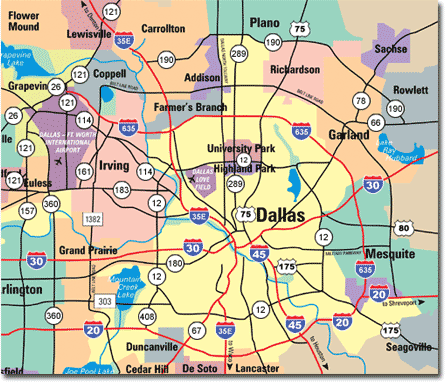
The diversity of the people sitting in the same seats
composed of metal and fabric brings up the idea of gentrification. It is an
interesting thought that a homeless man can live in the same area and take the
same transportation of a wealthy man. There are more similarities between them
than society would expect, except that one smells like Gucci and the other
smells like goop. Although I do become slightly off put when an upper middle
class teenager claims to be from the hood in Oak Cliff. Let me just go on the
record by saying that Kessler Park is much different from the rest of Oak
Cliff. I kind of look at it similarly to how Highland Park is in the middle of
Dallas, but technically not part of Dallas. They have their own mayor, own
school district, own everything and one of everything as if the whole town is a
fraternity.
I eventually
step off the bluesy locomotive as I think of all these things and onto the
fresh, genuine turf of East Dallas.

"We are the ones who knock"

We landed on the beautiful yet
ominous island on month one. Upon our arrival we encountered natives that
flourished in this environment. Our modern technology was far more advanced and
we could exterminate them easily, but the native’s traditional way of hunting
and gathering proved to be much more effective than our attempts. Accordingly,
our expedition team decided to use them to our advantage and learn their ways
in order to prosper. We developed good relations with the village and were
successful in keeping our resources in a safe manner.
Our group had enough resources for
the first month; so, every other month around the first six months we would
press the natives for help while allowing their chances of good will to be
reasonable. Thankfully because of this strategy our profit was steady even
though we ran into bad weather. Most of the rough weather had past during the
first seven months. Although, one month an awful storm came and we had to
pressure the natives for resources and supplies, all while keeping our chances
of goodwill adequate. Our expedition teams treasurer attempted to keep the
villagers good will above fifty percent throughout our trip. With much planning
and sleepless nights we were able to survive and keep good relations.
About five months were left on the
trip and things were looking fairly good. The village’s local fortuneteller and
meteorologist (do not ask me how they have one of those) informed us that we
only had one month of bad weather left. Once we learned of this, we knew that
our group had the opportunity to become the most powerful ones on the island.
No longer would we beg for the villager’s assistance, but they would beg for
ours. No longer were we fighting for survival, but for an empire. We are the
ones who knock.
The team’s margin of profit grew
and our moral was apparent. Although we were pressing much more than in the
previous months, there were some months we did not to keep some what good
relations with the natives. The last of the bad weather ended up being in month
twelve. If we had known this, our group would have pressured the natives even
more than we did and take their resources. By the end of the year our margin of
profit ended with five, (five of whatever you’d like to imagine) which was
among the most successful of all the expedition teams. However, the most
successful group collected six, but this will not defeat our kingdom. Rage on.

"The Chimney Sweeper is on your Team"
“The Chimney Sweeper” by William
Blake is such a great piece to check out. While reading, I find it to be very
cinema like with the way the story is told. Even though it is a poem it’s like
a narrative and I can picture every moment in my head. The poem reminds me of
the film “Joe The King” in that it deals with children being extremely poor,
and the kids must look out for each other. In the film, Joe is a kid in upstate
New York trying to survive with his uncaring father by doing whatever he can to
get by. For some reason I am always attracted to that type of story, or at
least most stories of kids growing up in harsh realities within the world.
The song and music video “Team” and
“Royals” by Lorde also reflect this idea. It brings up the point that sometimes
the losers are the true winners. These types of characters in which I gravitate
towards, possibly because I can relate to them, “don’t care, we aren’t caught
up in your love affair.” This concept makes me think about how there are more
important things in the world than some chick debating between two $5,000 prom
dresses. In reality the true winners are “not very pretty, but we sure know how
to run th
ings.” There is no materialism and “we’re on each others team” just
like the other boys were when they shaved Tom’s head.
The rhyme scheme in the first
stanza of “The Chimney Sweeper” creates a child like tone, which causes me to
feel sorry for the boy. I also feel a great sense of comradeship within the
kids as they go through severe experiences together. The boys are all dirty
with soot, but then they run to the river and sun, and wash themselves, causing
them to be naked and white. This suggests that the sun and river provide and
resemble purification to the boys, making them clean and innocent again. Similar
to Holden at the end of “The Catcher in the Rye.”
After being told god would be his
father if he were good, Tom does his duty and does not fear harm. This
illustrates his faith and the other workers faith toward god, or at least
something to believe in that can provide hope in a stressful time. In times of
dreadfulness many people take up religion because it provides a sense of
release no matter what is going on in the world. I think this is truly why Tom
spends his next day working happy and warm. All of the boys want “a love they
won’t receive, cause what this palace wants is release.” Whoever reads “The
Chimney Sweeper” should definitely check out those Lorde songs.


"Macbeth vs. Walter White"
One of my favorite movies is "The
Departed." Like “Macbeth,” this film can be extremely hard to watch. For
those who haven’t seen it, look out because I am about to give a big spoiler.
Pretty much everyone dies. No, seriously, I am not kidding, just about every
character of some importance in the film dies. The interesting thing about the
relation to “The Departed” and “Macbeth” is that there is not one direct
character connection. No one specific character in the film is forthrightly
related to Macbeth.
While watching, I noticed that some aspects of several
characters from the movie reminded me of Macbeth. The one that stood out to me
was Staff Sgt. Colin Sullivan, played by Matt Damon. He plays a high-ranking
cop who is secretly part of the South Boston mob. In the film, the police
department knows that there is a rat among them and they put Sullivan in charge
of finding him. Little do they know, he is the rat. Eventually another officer
discovers who he really is and lets several other people know. Sullivan then
begins to go on a downward spiral of no return, much like Macbeth. Instead of
Sullivan coming clean or leaving his mobster life behind, he does whatever he
possibly can to cover it up. This character is certain to get caught at some
point. There are simply too many people who will find out his dark secret and
give him up. But, similarly to Macbeth, Sullivan deceives and kills his way
through the story. Unfortunately, an individual can’t go through life killing
everyone that gets in their way, so these two characters are destined for
failure.
Throughout the entire
film I was rooting for the character that saw Sullivan for the fraud he was. But,
part of me also wanted Sullivan to survive and have a happy ending. I felt this
way in the beginning of “Macbeth”
when I could not decide if I wanted him to be caught or not. It is an
interesting thing when a stories villain is also its main character. In the end Sullivan and Macbeth both
die.
“The Departed” is somewhat of a Shakespearean tragedy of its own.
Basically everyone is killed and the one character that had good morals is
murdered in an instant, as if it was nothing, comparably to the servants that
are killed by Macbeth. With a couple of exceptions, “The Departed” and “Macbeth”
show that everyone is guilty of something. Perhaps Scorsese is as good as a
storyteller as Shakespeare, or looks to him for inspiration. I am not saying he
does and I am not saying he doesn’t. All I am saying is that all of these
similarities are something to think about.

Are Sonnets and Poems Actually Fun?
I guess I was not extremely surprised to learn that most poems employ the form of sonnets. I mean, there are tons of similarities in their structure and sound, not to mention they look the same because of stanzas. Something interesting about sonnets is that they do not always rhyme. It seems that when they do rhyme, most of the time (haha get it) it can be obscure. Such as the one Foster gave an example of, abbaabba. In my mind, in many cases, poets and rappers are the same.
I have never read a more than normal amount of poetry in my
life. But, reading “An Echo from Willow- Wood” by Christina Rossetti was quite
fun. At first it was not, because I did not understand a word she meant. Once I
kept reading and Foster walked the audience through the meaning, it became
clearer. Uncovering the story became like a puzzle, one piece led to another
and once you have got the structure figured out, it became a bit easier.
This blows my mind that a little block of writing can have
so much meaning to it. I guess this is why a person should expect the
unexpected in art. The way Foster gives his interpretation of the poem is
fascinating. For a piece to be written abstractly, with so much meaning, and
later understood by someone else is truly artistic. It is something I am not
very good at, so I envy the individuals who have this ability. I remember that
in my freshman year of high school our class was reading “Romeo and Juliet.”
While following along, I would look up and think, “people are actually
understanding this stuff?” But, I learned that it would just take time and
practice, just as Foster said. Now I have the ability to somewhat understand
Shakespeare without spending too much time analyzing it. Someday I hope to
fluently understand.
One of the things I want to grow in and I think it will help
me with all my artistic endeavors, is the ability to fully comprehend
literature. It is as though there is nothing definite with literature, unlike
math where there are rules and everything is exact. Not to say that there are
not rules within writing. Foster explained many of them actually. I just mean
that in literature rules can always be broken, you just have to know them
first. One of the ways I can build this skill is by paying attention to form. I
now look at them as clues to what the meaning of the piece actually is. As
cheesy as it sounds, after reading this chapter I will begin to pay much more
attention to form.
http://hudsonshakespeare.org/images/Shake%20images/sonnet%20header.jpg


If Your Under the Weather, Maybe it's because of the Weather
In my writing and reading experiences, I have learned that
the weather can set a major tone in the story. Not just the weather, but also
even the scenery. As readers, why do we always automatically infer so much
about the story through the weather? It is not like we are meteorologists, so
how do we know so much just by the forecast?
I think a lot of it has to do with the media and classic
story telling. As society grows up we learn the stereotypical moods that go
with each weather forecast. In the cartoons, when it rains usually everyone
gets sad or goes inside. When it is sunny, everyone is joyful and full of energy.
So, in a way our childhood is how people know so much about weather and how it
makes us feel.
As far as getting past the stereotypical moods for different
types of weather, I was not sure of the more thought provoking and in depth
tones weather can have. Rain and Fog were still fairly predictable, because I
have seen a lot of rain and fog in my life and it has caused me to feel many
different ways. Although, sometimes when rain is used it can be very
interesting. In “The Catcher in the Rye” by J. D. Salinger rain is used
symbolically at the end of the book. The protagonist, Holden, just sits in the
rain and lets it pour down on him. In this instance, the tool of rain could be
looked at in many different ways. I see it as him being cleansed of his innocence
and beginning to make the transition of becoming an adult.
In “Shawshank Redemption” the main character Andy Dufresne
is wrongly imprisoned for the murder of his wife. After many years in the cell,
he escapes through some sort of sewer pipe. When Andy makes it out he is
covered in poop while being heavily rained upon. In this situation the rain was
used as a rebirth and cleansing of everything awful he had to go through. He
now had the opportunity to start a new life and leave the past behind. Ah!
Rain is just fantastic, isn’t it?
Snow on the other hand was more unexpected and versatile.
This could be because I have grown up in Texas and have not seen very much snow
in my life. But, after reading this chapter, I now know there are so many
specific feelings one can experience from snow. Snow “can mean as much as rain”
but much more.
All of the examples Foster gave made me think about all of
the movies and plays I have seen snow in. When I read “inviting” and “playful”
I thought of all the Santa Clause Films, especially the ones with Tim
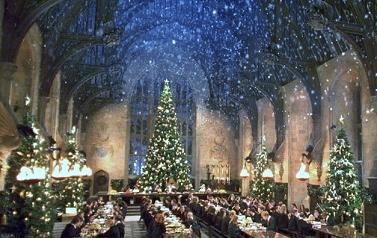
Allen. Snow is a tool used often
in the Harry Potter movies too. Every time something depressing is happening
and everyone’s morals are low, it begins to snow. It has the ability to
revitalize people.
Symbol, Simple and Nimble
I have always found it so impressive when people have the
ability to interpret literature in their own sophisticated way. I spoke about
it a bit in my last post, because I really do think it is cool! I always looked
at it as being really complicated and hard to understand. This kind of thing
was never really my strong suit. But after reading this chapter it seems so
much easier. So, thanks Thomas C. Foster. Once I read several of his examples,
which were very interesting symbols, I realized there can’t just be one way to
explicate it. I imagine that when looking at symbols there has got to be many
different view points.
It just takes practice to develop the reader’s imagination
and see which symbolic meaning fits best, within context of the story. This is
something I have been trying to work on. One of the books I recalled while
trying to practice this ability was “Night” by Eli Wiesel. At the end of the
book he looks at himself in the mirror after going through truly unbelievable,
life threatening struggles. This action could mean many things. But to me,
looking back on the story, it meant after all he had been through and growing
up so fast, he did not know who he was anymore. It is a quite sad thing having
to go through that, then finally stop and look at yourself. What I interpreted
is just one viewpoint. I am sure there are other meanings that could work as
well.
Another symbol I remembered was from “The Catcher in the
Rye” by J.D. Salinger. The protagonist,
Holden, still lives in a child like world even though he is transitioning into
adulthood. Holden imagines kids playing in a field of Rye on top of a high
cliff. His dream is to catch them from falling off. An individual can look at
this from almost any angel he or she wants to. But I see it as an almost Peter
Pan like situation. A kid does not want to grow up and face leaving the
innocence of childhood to join the real world. So instead, he wants to “catch”
other kids from falling into this adulthood, which includes sex.
Much of what this takes to find and understand symbolism is
a broad imagination. It is not only a skill to write with these aspects in
mind, but also a skill to read with these aspects in mind. It is a talent on
its own to clarify what a writer is trying to say within their story. This type
of mental interaction between the author and audience is art, whether people
realize it or not.

Pretty good writing. It's in the blood. My favorite is "To Turn One's Head". The last "as you ponder" stanza is easy to answer for about 99.9% of "normal" people. For those of us "break bad" long ago scientist types their aren't two choices. There is a paradoxical tragic but necessary 3rd choice.
ReplyDeleteFor us it was very necessary to turn one's head and sprint down the clandestine, dark tunnel and risk everything, especially death, in order to protect all that we individually chose. It doomed us that are still alive forever...but it was worth it...because the internet despite what you hear became net neutral forever... >;-)